
By PondpumpTeam / May 13, 2026 / Leave a Comment
- Introduction
- Signs Your Pond Pump Is Overheating
- Why Is My Pond Pump Overheating?
- Can Hot Weather Cause Pond Pump Overheating?
- How Hot Should a Pond Pump Be?
- How to Fix an Overheating Pond Pump
- Pond Air Pump Overheating
- How to Prevent Pond Pump Overheating
- Quick Troubleshooting Checklist
- When Should You Replace an Overheating Pond Pump?
- Conclusion
Introduction
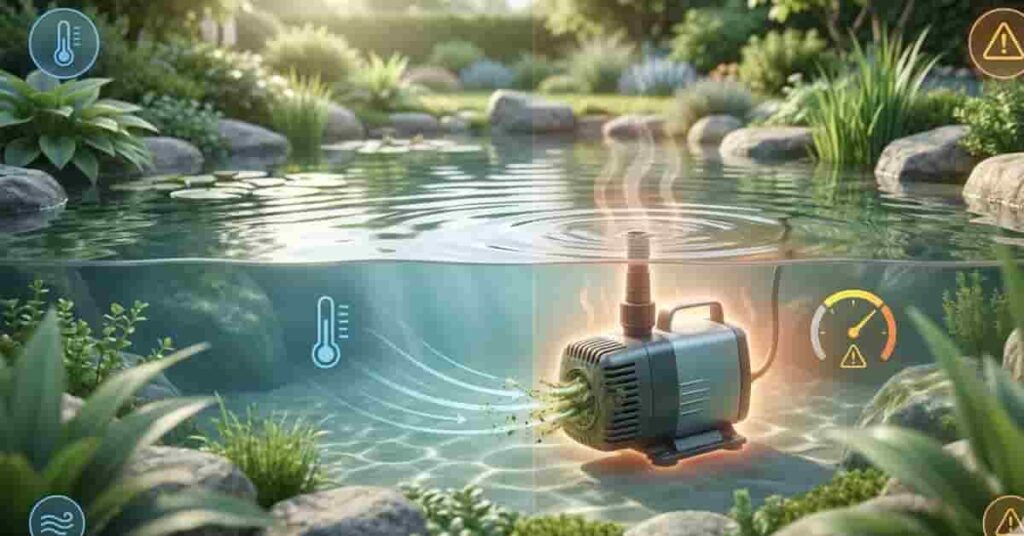
A pond pump overheating problem can quickly affect your entire pond system. Pond pumps usually stay cool when water moves properly through the motor and filter system. If the pump starts running hot, something is often blocking water flow or forcing the motor to work harder than normal.
An overheating pond pump can reduce circulation, lower oxygen levels, and stress fish during warm weather. In some cases, excessive heat may damage the motor, filters, or internal pump parts. Common causes include clogged pump intakes, dirty filters, low pond water levels, blocked pipes, and poor ventilation around the motor.
Many pond owners first notice weaker water flow or a pump that feels unusually hot to the touch. Some pumps may even shut off automatically because of thermal overload protection. Fixing the problem early can help you avoid expensive repairs or full pump replacement.
One pond owner noticed their waterfall slowing down during the summer heat. After cleaning a heavily clogged intake screen, the pump temperature returned to normal within minutes. Small maintenance problems often lead to bigger overheating issues if ignored.
This guide explains why pond pumps overheat, how to safely fix an overheating pond pump, and the best ways to prevent it in the future.
Signs Your Pond Pump Is Overheating
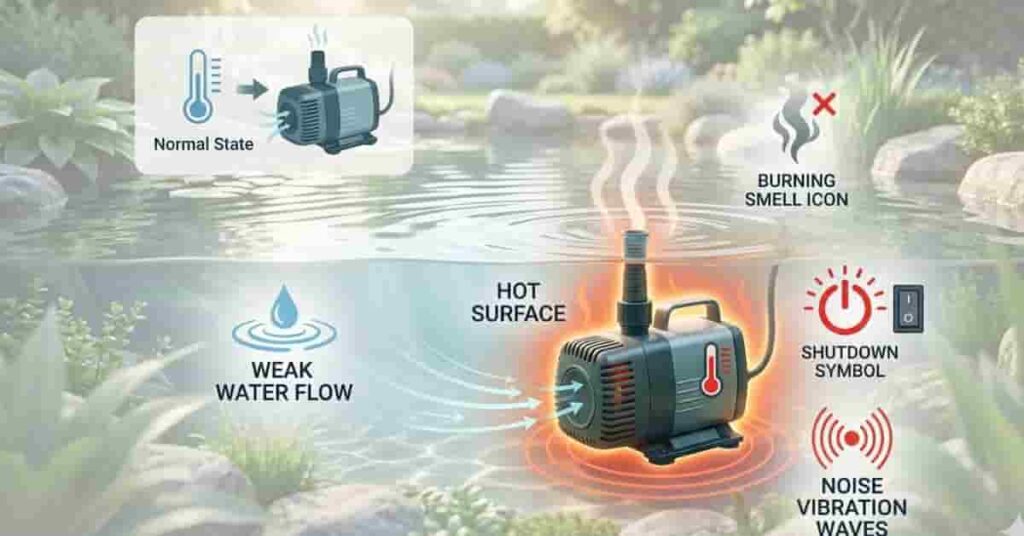
A pond pump overheating problem often starts with small warning signs. Catching these problems early can prevent motor damage and expensive repairs. Most pumps do not fail suddenly. Instead, they show changes in temperature, water flow, or noise before shutting down completely.
Many overheating problems happen when water cannot move freely through the pump system. Debris buildup, clogged filters, or low water levels force the motor to work harder. Over time, the extra strain creates excess heat inside the pump housing.
Before checking for specific symptoms, it helps to know which signs signal an overheating problem. If you notice one or more of the following, inspect your pond pump as soon as possible.
Overheating often happens when water flow is restricted, so improving circulation can reduce pump stress. Learn more here: How to Increase and Optimize Water Flow in a Pond Pump (Complete Guide).
Pump Feels Extremely Hot
Most pond pumps feel slightly warm during normal operation. Water moving through the system helps cool the motor while it runs. A pump that becomes too hot to touch comfortably often has a cooling problem or restricted water flow.
Submersible pond pumps depend on the surrounding water to control motor temperature. If the water level drops too low, the pump may overheat quickly. Dirt buildup around the intake can also trap heat inside the housing.
A very hot pump should never be ignored. Continued overheating may damage seals, bearings, or the motor itself.
Reduced Water Flow
Weak water circulation is one of the most common signs of an overheating pond pump. You may notice a smaller waterfall, weak fountain spray, or slow-moving pond water.
Clogged filters, blocked pipes, or dirty impellers often reduce water flow. When water cannot move properly, the motor works harder and creates more heat. This extra strain can lead to overheating over time.
Low water flow also affects pond health. Poor circulation lowers oxygen levels and allows debris to accumulate more quickly in the pond.
One pond owner noticed their waterfall losing pressure during a heat wave. After cleaning the intake screen of algae, normal flow returned almost immediately.
Pump Keeps Shutting Off
Many modern pond pumps include thermal overload protection. This safety feature turns the motor off when temperatures reach dangerous levels. The pump may restart after cooling down.
Repeated shutdowns usually indicate a problem with the pond pump rather than a faulty switch. Restricted water flow, clogged intakes, and worn motors are common triggers of thermal protection systems.
Some pond owners mistake this issue for an electrical failure. In reality, the motor often shuts down to prevent permanent damage.
If your pump cycles on and off regularly, inspect the intake, filter, and water level first. Continuous overheating can shorten the motor’s lifespan.
Strange Noises or Vibrations
An overheating pond pump may produce unusual sounds before it fails completely. Grinding, humming, rattling, or vibrating noises often occur when internal parts wear down due to excess heat.
A clogged impeller is a common cause of vibration and humming. Debris trapped inside the housing can make the motor struggle during operation. Overheated bearings may also create loud grinding sounds.
These noises usually become worse over time if the problem remains untreated. Ignoring them can lead to permanent motor damage or broken internal components.
Check the pump immediately if new noises appear suddenly. Cleaning the impeller area often solves minor vibration problems early.
Burning Smell Near the Pump
A burning smell near your pond pump is a serious warning sign. Overheated electrical components or motor windings may create a hot plastic or burning odor.
This smell often appears after prolonged overheating or poor ventilation. External pond air pumps may also produce burning odors if airflow becomes restricted.
Turn off the pump immediately if you notice this problem. Continuing to run the motor may create permanent electrical damage or safety risks.
Inspect the power cord, housing, and ventilation areas after the pump cools down. If the smell continues after cleaning, the motor may need professional repair or replacement.
Pro Tip
Never ignore a burning smell around electrical pond equipment. Early shutdown can prevent major motor failure.
Why Is My Pond Pump Overheating?
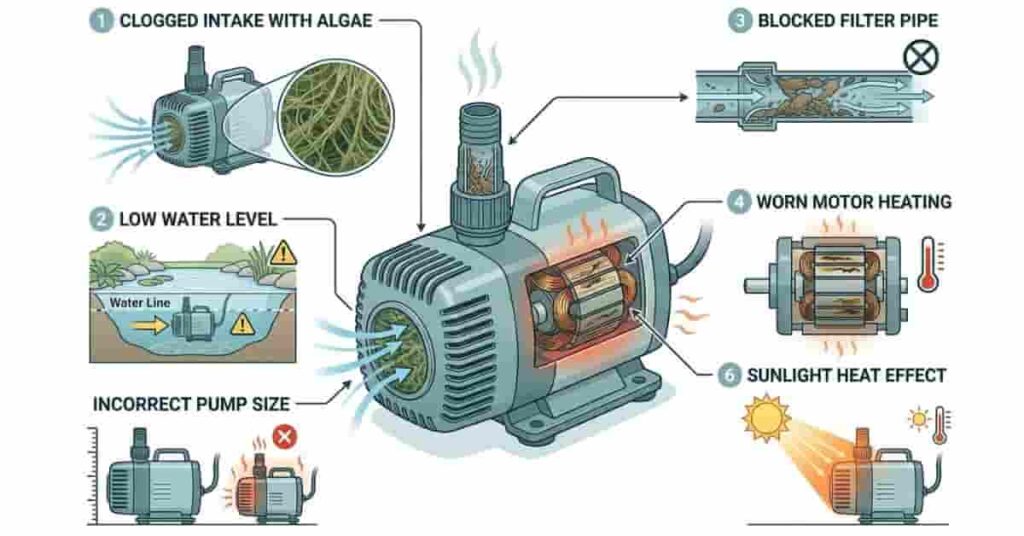
A pond pump overheating problem usually happens when the motor cannot cool itself properly. Most pond pumps depend on steady water flow or good airflow to control heat. If something blocks circulation or forces the motor to work harder, temperatures rise quickly.
Small maintenance issues often create bigger overheating problems over time. Dirty filters, clogged intakes, low water levels, and poor ventilation are some of the most common causes. Identifying the exact cause early can help you prevent costly pump damage.
Below are the most common reasons a pond pump starts running hot.
Clogged Pump Intake
A clogged intake is one of the leading causes of pond pump overheating. Leaves, algae, sludge, and small debris can block the intake screen and restrict water flow through the pump.
When less water moves through the system, the motor loses its main cooling source. The pump then works harder to maintain circulation, creating excess heat inside the housing.
This problem becomes more common during the fall and algae-growth periods. Ponds with heavy fish waste or nearby trees may clog faster than others.
Regularly cleaning the intake can prevent overheating and improve overall pond circulation. Many pond owners solve overheating problems simply by removing debris from the intake screen and impeller area.
Low Pond Water Level
Submersible pond pumps rely on the surrounding water to cool the motor during operation. If the pond water level drops too low, parts of the pump may become exposed to air.
Without enough water around the housing, heat builds up much faster. This problem often appears during hot summer weather or long dry periods.
Evaporation can lower pond water levels more than many beginners expect. Small leaks around waterfalls or liners may also reduce water depth slowly over time.
Check the water level regularly, especially during warm months. Keeping the pump fully submerged helps maintain safe operating temperatures and stable circulation.
Dirty Filter or Blocked Pipes
Dirty filters and blocked pipes force a pond pump to work harder than normal. As debris accumulates in the filtration system, water struggles to flow freely through the pond setup.
Restricted flow increases pressure inside the pump and places extra strain on the motor. Over time, the added workload raises operating temperatures and may trigger thermal shutdown protection.
Small blockages inside flexible hoses can also reduce circulation without obvious signs. Many pond owners focus only on the pump itself and forget to inspect pipes and filters.
Regularly cleaning filters helps maintain healthy water flow and reduces overheating. It also improves water clarity and oxygen circulation for fish.
Running the Pump Dry
Running a pond pump without water can damage the motor very quickly. Water cools and lubricates many internal pump components during operation.
If the pump runs dry, heat builds up within minutes. Seals, bearings, and motor parts may crack or fail from excessive temperatures.
This issue often happens after low water levels, clogged intakes, or maintenance mistakes. Some pumps shut off automatically, but others continue running until serious damage occurs.
Always check the water flow before restarting the pump after cleaning or repairs. Even short dry runs can significantly shorten the motor’s life.
Worn or Aging Pump Motor
Older pond pumps naturally become less efficient over time. Internal motor parts wear down after years of constant use, especially in ponds with heavy debris or poor maintenance.
As efficiency drops, the motor creates more heat during normal operation. Worn bearings, damaged seals, and aging electrical components can also increase friction and overheating.
A pump that repeatedly overheats after cleaning may have internal wear. Strange noises, weak flow, and frequent shutdowns often appear as the motor ages.
In some cases, replacing an old pump costs less than repeated repairs. Modern energy-efficient pumps also use less electricity and run cooler.
Incorrect Pump Size
Using the wrong pump size can lead to overheating. An undersized pond pump may struggle continuously to move enough water through filters, waterfalls, and pipes.
Constant overworking places stress on the motor and raises operating temperatures. Small pumps often wear out faster when used in large pond systems.
Oversized pumps may also cause circulation issues if the plumbing cannot handle the flow. Matching the pump size to your pond volume helps maintain stable performance.
Most pond experts recommend choosing a pump that circulates the entire pond volume every 1 to 2 hours. [placeholder]
Hot Summer Weather
Hot weather can increase the risk of the pond pump overheating, especially during heat waves. Warm pond water removes heat less effectively than cooler water.
Direct sunlight also raises motor temperature throughout the day. Shallow ponds heat up faster and place more stress on the pump system.
Summer algae growth can worsen the problem by clogging intakes and filters more often. Many pond owners notice overheating issues during the hottest weeks of the year.
Adding shade, maintaining water levels, and cleaning filters regularly can reduce summer overheating risks.
Poor Ventilation Around External Pumps
External pond pumps and pond air pumps need proper airflow to safely dissipate heat. If ventilation openings become blocked, heat can build up around the motor housing.
This problem often occurs when pumps are installed in tight boxes, sheds, or enclosed filter areas. Dust buildup around cooling vents may also reduce airflow over time.
Poor ventilation can shorten motor life and increase the chance of thermal shutdowns. Air pumps exposed to direct sunlight may overheat even faster during summer. Keep external pumps in shaded, well-ventilated areas with enough open space around the housing.
If your pump is also making unusual noise along with heat issues, check this troubleshooting guide: Pond Pump Making Noise? Causes, Fixes & Easy Solutions.
Can Hot Weather Cause Pond Pump Overheating?
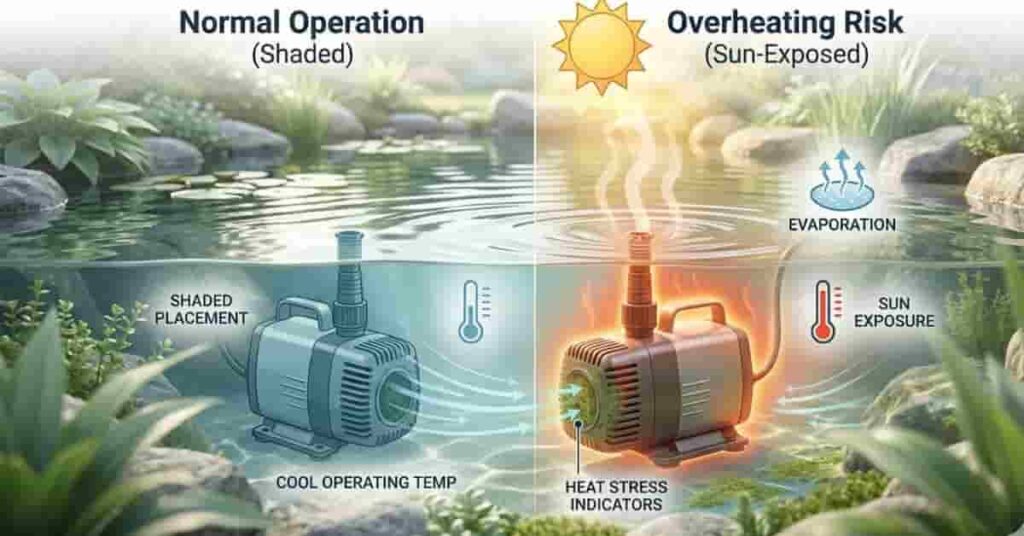
Yes, hot weather can increase the risk of the pond pump overheating, especially during summer heat waves. Warm temperatures place extra stress on both submersible and external pond pumps. Shallow ponds heat up faster, which reduces the pump’s ability to stay cool during operation.
Pumps exposed to direct sunlight often run much hotter throughout the day. Dark-colored pump housings can absorb even more heat during peak afternoon temperatures. If the pond water becomes too warm, it cannot cool the motor as efficiently as cooler water.
Warm water also contains less dissolved oxygen. Lower oxygen levels may stress fish and reduce overall pond health during summer. At the same time, algae growth increases faster in hot weather, leading to clogged filters and blocked pump intakes.
Older pond pumps usually struggle more during extreme heat. Worn motors already operate less efficiently, so additional summer heat may trigger thermal overload protection or repeated shutdowns.
One pond owner noticed their pump shutting off every afternoon during a heat wave. After adding shade cloth above the pond and cleaning the filter system, the overheating problem stopped within two days.
Quick Prevention Tips
You can reduce overheating risks during hot weather with a few simple maintenance steps:
- Add shade around the pond with plants, covers, or shade sails.
- Keep pond water topped up during dry weather.
- Improve aeration to increase oxygen circulation.
- Clean filters and pump intakes more often in summer.
- Move external pumps out of direct sunlight.
- Check water flow regularly during heat waves.
How Hot Should a Pond Pump Be?

We are the StatisticsTools.com Development Team, dedicated to building accurate, easy-to-use statistical calculators and educational resources for students, educators, researchers, and professionals.
Our mission is to make statistics simple by providing free, reliable tools for data analysis, probability, hypothesis testing, regression, and other statistical calculations. We also create practical guides that explain statistical concepts in a clear and easy-to-understand way.
At StatisticsTools.com, we are continuously improving our platform by adding new calculators and educational resources to help users solve statistical problems quickly and confidently.